To drive green economic development, the Party and State have issued many directions and policies, among them the National Green Growth Strategy for 2011–2020 with a vision to 2050. The strategy states: "Green growth is an important element of sustainable development, ensuring rapid, effective and sustainable economic growth and contributing significantly to the National Climate Change Strategy."
The Political Report to the 13th National Party Congress set the country's development direction for 2021–2030: "Adapt actively and effectively to climate change; prevent and mitigate natural disasters and epidemics; manage, extract and use resources rationally, economically, efficiently and sustainably; make protection of the living environment and of public health the foremost objective; resolutely reject projects that pollute; safeguard environmental quality, biodiversity and ecosystems; and build a green, circular, environmentally friendly economy."
In recent years the Government, ministries, sectors and provinces have issued numerous legal documents, programmes, action plans and directives on green economic development, sustainable growth and environmental protection. Among the Prime Minister's decisions: Decision 622/QD-TTg of 10 May 2017 issuing the national action plan to implement the 2030 Agenda for Sustainable Development; Decision 1670/QD-TTg of 31 October 2017 approving the target programme on climate change response and green growth for 2016–2020; Decision 1658/QD-TTg of 1 October 2021 approving the National Green Growth Strategy for 2021–2030 with a vision to 2050; and Directive 13/CT-TTg of 2 May 2024 on strengthening carbon credit management.
On mitigating greenhouse gas emissions, the Government, the Prime Minister and the Ministry of Natural Resources and Environment have issued guidance and requirements for businesses, organisations and individuals: Government Decree 06/2022/ND-CP of 7 January 2022 on mitigating greenhouse gas emissions and protecting the ozone layer; Prime Ministerial Decision 01/2022/QD-TTg of 18 January 2022 issuing the list of sectors and facilities that must conduct greenhouse gas inventories; and Circular 01/2022/TT-BTNMT of 7 January 2022 detailing implementation of the Law on Environmental Protection with respect to climate change response.
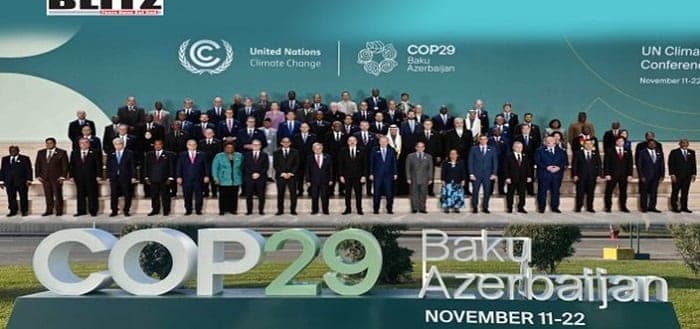
At COP26 (31 October to 13 November 2021 in Glasgow, Scotland), Vietnam made an impression with its commitment to net zero emissions by 2050, to raising renewables above 30% of primary energy supply, and to holding forest cover steady at 43% — a clear statement of intent to restructure the country's growth model towards a sustainable green economy.
How this looks in practice in Thai Nguyen province
In the resolution of its 20th Provincial Party Congress for the 2020–2025 term, Thai Nguyen set out tasks and measures for socio-economic development tied to the green economy, environmental protection and sustainability:
- Translate Party policy into concrete mechanisms that secure rapid and sustainable development, shifting the economic structure alongside a renewed growth model and stronger regional linkage.
- Prepare the provincial master plan for 2021–2030 with a vision to 2050, consistent with the national master plan and the plan for the northern midlands and mountains; plan Thai Nguyen's urban system with sensible distribution across the province and good connections to the Red River Delta urban system, combining the modern and the traditional, environmentally friendly, leading innovation and driving economic growth.
- Build specific mechanisms and policies to attract resources and investors, prioritising investment in industrial parks and clusters in sectors where the province has potential and advantage: electrical and electronic industry, mechanical engineering, mineral processing, and agricultural and forestry processing — with environmental control and protection throughout.
- Take advantage of the gains and opportunities of the Fourth Industrial Revolution; shift the industrial structure towards high-technology, high value-added and clean industry.
- Develop a construction sector capable of designing and building what the country's socio-economic development requires. Put in place policy to attract investment in modernising construction, using new materials, saving energy and applying modern building technology.
- Produce safe, organic, high-technology agriculture; develop the forestry economy alongside sustainable forest management, with an emphasis on large-timber plantations and medicinal plants.
- Renew investment, trade and services promotion; diversify how investment is attracted, prioritising large projects with advanced, modern technology and environmentally friendly production, and investors with the means and the long-term strategy to create wider benefit.
Implementing Prime Ministerial Decision 1658/QD-TTg of 1 October 2021 approving the National Green Growth Strategy for 2021–2030 with a vision to 2050, and Decision 882/QD-TTg of 22 July 2022 approving the national green growth action plan for 2021–2030, the Thai Nguyen People's Committee issued the province's own green growth action plan for 2021–2030 under Decision 1718/QD-UBND of 21 July 2023.
The provincial action plan gives concrete form to the views, objectives, direction and measures of those two decisions, and builds agreement in understanding and in action across the province's authorities, mass organisations and people, contributing to the national strategy and action plan.
It sets out the province's central objectives, tasks and measures, tied closely to the direction, objectives and measures for socio-economic development in Politburo Resolution 11-NQ/TW of 10 February 2022 on socio-economic development and on defence and security in the northern midlands and mountains to 2030 with a vision to 2045; Prime Ministerial Decision 222/QD-TTg of 14 March 2023 approving the Thai Nguyen provincial master plan for 2021–2030 with a vision to 2050; the resolution of the 20th Provincial Party Congress for 2020–2025; the five-year socio-economic development plan for 2021–2025; and the main tasks and measures in the Government's action programme.
To press ahead with the rules on reducing greenhouse gas emissions, responding to climate change and protecting the ozone layer, the chairman of the Thai Nguyen People's Committee issued documents 2027/UBND-CNN&XD of 24 April 2024 and 2270/UBND-CNN&XD of 9 May 2024, directing the Department of Natural Resources and Environment and other departments, agencies, localities and units to: continue climate adaptation work across the province; monitor and evaluate adaptation activity within their sectors under clause 4, article 90 of the Law on Environmental Protection; inspect activities related to greenhouse gas mitigation within their remit under clause 6, article 91; implement controls on the production, export and import of ozone-depleting and greenhouse gas substances under clause 4, article 92; and implement Directive 13/CT-TTg of 2 May 2024 on strengthening carbon credit management.
Earlier, from 2012, the province issued its climate change response action plan under Decision 1013/QD-UBND of 18 May 2012; the climate adaptation action plan for irrigation works in the province approved under Decision 2643/QD-UBND of 17 November 2024; and the climate change response action plan for 2021–2030 with a vision to 2050 under Decision 4229/QD-UBND of 31 December 2020.
On urban trees, on 17 June 2021 the chairman of the provincial People's Committee issued Directive 13/CT-UBND on managing and promoting urban tree cover, and document 1462/UBND-CNN&XD of 6 April 2023 on strengthening the management and construction of parks and green space in urban and housing projects in the province.
Thai Nguyen's green growth objectives to 2030
Building on what the 2011–2020 strategy achieved, on the views set out in the national strategy for 2021–2030 with a vision to 2050, and on the tasks in the national action plan for 2021–2030, Thai Nguyen states the objective of its own action plan for 2021–2030 as: "Green growth contributes to restructuring the economy alongside a renewed growth model, to achieve economic prosperity, environmental sustainability and social equity in Thai Nguyen province; moving towards a green, carbon-neutral economy and contributing to limiting the rise in global temperature."
Specific objectives
- Greening the economic sectors.
- Greening ways of living and encouraging sustainable consumption.
- Greening the transition on principles of equity and inclusion, with greater resilience.
Some proposals for green economic development
To develop a green economy tied to comprehensive national sustainability — meeting growth targets while securing social welfare and protecting the environment and ecosystems for the future — Thai Nguyen proposes the following.
First, environmental policy should be adjusted to current conditions; resource taxes and environmental protection taxes should be studied further, adjusted and completed; and there should be sanctions ensuring that products bearing "Made in Vietnam" do not breach rules on environmental and climate pollution. More conferences and scientific forums should be held to exchange knowledge and experience on green economic development.
Second, implement Directive 13/CT-TTg of 2 May 2024 on strengthening carbon credit management effectively, in service of the Nationally Determined Contribution (NDC). Business owners should study carbon credits and carbon markets relevant to their sector early, and take part in reducing greenhouse gas emissions and protecting the atmosphere.
Third, move faster on carbon tax policy as part of green economic development. In Vietnam carbon tax is still a relatively new term; it is an important instrument of the circular economy. Taxing carbon is an effective way to cut a country's CO₂ emissions. It also adds to state budget revenue, which the Government can invest back into protecting and improving environmental quality, supporting green growth and reducing the greenhouse effect and CO₂ emissions.
Fourth, renew how people think about environmental protection in their own conduct, and their sense of responsibility towards nature and the environment. Environmental education from an early age is essential, leading to practical action on ecosystem restoration, biodiversity conservation and climate response — and making the Government's strategies, programmes and action plans more effective.
Carbon credits
A carbon credit is a tradable certificate representing the right to emit greenhouse gases, specifically CO₂. It represents the right to emit one tonne of CO₂, or another greenhouse gas equivalent to one tonne of CO₂, into the atmosphere.
-
A carbon credit is a tradable permit or certificate giving the holder the right to emit one tonne of carbon dioxide or the equivalent in another greenhouse gas. The main purpose of creating carbon credits is to reduce carbon dioxide and other greenhouse gas emissions from industrial activity, and so to lessen global warming.
-
A carbon credit is a tradable certificate representing the right to emit greenhouse gases, specifically CO₂.
Source: Central Propaganda Department, Communist Party of Vietnam
Updated September 5, 2026