Below, Đào Xuân Lai, head of climate change, environment and energy at UNDP, reports from COP28 in the UAE on Vietnam's early results after four days at the conference — including Prime Minister Phạm Minh Chính's commitment to investors that policy for renewable energy development will be made concrete soon, among it a standard contract for direct power purchase between renewable generators and large electricity customers.
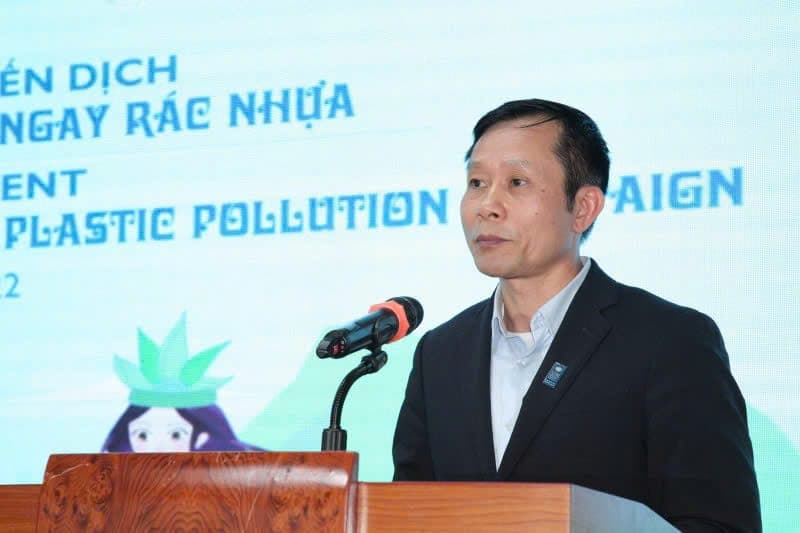
Đào Xuân Lai (file photo).
What has the Vietnamese delegation achieved after four days at COP28?
By the end of 3 December, day four of COP28, Vietnam had four main results.
First, Vietnam and the International Partners Group — the European Union, the United Kingdom, the United States, Japan, Germany, France, Italy, Canada, Denmark and Norway — adopted a plan to mobilise USD 15.5 billion over the next three to five years to meet urgent needs and catalyse Vietnam's just energy transition. The IPG has committed to raising this capital on attractive lending terms and to supporting the private sector through investment. It is an important marker for Vietnam in negotiating the loans and specific contributions that will make the USD 15.5 billion work — both for the transition itself and as leverage to mobilise private capital, contributing to the circular, digital and green economy.
Second, Prime Minister Phạm Minh Chính gave a significant address at COP28 on the afternoon of 2 December, affirming Vietnam's determination to meet its net zero commitment by 2050. He called for better coordination between parties, and for developed countries to continue supporting developing ones — particularly with finance and technology transfer — so that they have the resources and the capability to adapt to climate change and carry out the energy transition.
He also set out Vietnam's efforts and the results achieved since its commitment at COP26.
Ahead, the Prime Minister said, Vietnam will put in place a more concrete legal and policy framework: building a smart transmission system, issuing a standard contract for direct renewable power purchase, and more. These are clear, direct signals to foreign investors that Vietnam is committed and intends to deliver, creating favourable conditions and reducing risk. Vietnam wants larger and higher-quality investment in green development and the energy transition.
Third, the Prime Minister and the Minister of Natural Resources and Environment held numerous bilateral and multilateral meetings with developed countries and international corporations, to build and extend partnerships with leading names in renewable energy and offshore wind. This is Vietnam's chance to grow a new economic sector in renewables and offshore wind, with export potential — to Singapore and other ASEAN countries, for example. With more than 3,000 km of coastline the potential is considerable, and it means budget revenue, jobs and local economic growth as well.
Fourth, this year Vietnam had its own conference room, where it held more than ten side events sharing Vietnam's experience and lessons in climate adaptation and its measures to reduce greenhouse gas emissions as a contribution to the global effort. Vietnam also came to learn from other countries and from experts about responses to climate change and energy transition.
COP28 has had early successes, particularly the agreement to begin operating the Loss and Damage Fund with very large financial commitments. More than USD 600 million has been raised so far.
Much remains to be worked out: the fund's operating principles, and how much poorer countries will be expected to contribute in future. I hope Vietnam takes an active part in shaping and running it.
Through that, Vietnam could benefit from the fund in raising the resilience of coastal communities and of people in the northern mountains and in remote areas against natural hazards.
Vietnam announced its JETP Resource Mobilisation Plan at COP28. How do you view that?
It is an important marker of the work done by Vietnam and its international partners: within a single year (December 2022 to December 2023) Vietnam produced a concrete roadmap. That is a bright spot, and compared with other countries Vietnam has moved harder and faster — an example for others to follow. Vietnam needs roughly USD 135 billion to develop renewable energy by 2030, so USD 15.5 billion is not large against the need. But it is the initial sum that activates and draws in further international and private resources, so that Vietnam can build new energy and renewable sectors that depend less on fossil fuels.
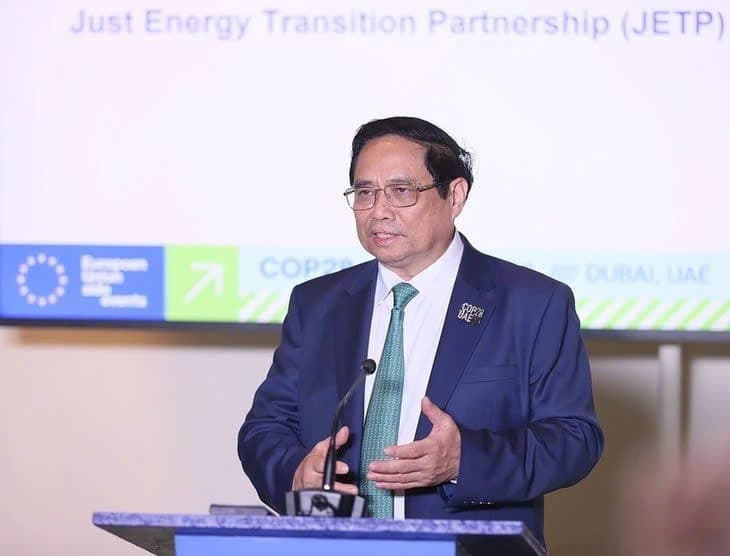
Prime Minister Phạm Minh Chính speaking at the launch of the JETP Resource Mobilisation Plan. Photo: Dương Giang/TTXVN.
The plan also positions Vietnam to build a new economic sector, which requires strengthening institutions and law to attract higher-quality FDI into the green economy. It also helps Vietnam invest in research and work with other countries on technology transfer in this field.
Notably, the JETP plan stresses that fairness and equity are the core values on which a successful energy transition in Vietnam rests. The declaration is explicit that electricity must remain affordable and reliable for the public and for low-income households.
On social policy, workers and communities currently employed in energy — coal power, coal mining — need the skills to move into new sectors. And benefits must be distributed fairly among all parties: provinces, communities, businesses and the state.
How do you assess Vietnam's efforts over the past two years?
The Government committed at COP26 to net zero greenhouse gas emissions by 2050. It updated its NDC in 2022, raising Vietnam's targets, and issued strategies and policies: the National Climate Change Strategy to 2050; the National Green Growth Strategy for 2021–2030 with a vision to 2050; sectoral plans including the national plan to implement the Glasgow Declaration on Forests and Land Use to 2030; Decision 876/QD-TTg approving the action programme on green energy transition and on reducing carbon and methane emissions in transport; and the National Power Development Plan for 2021–2030 with a vision to 2050 (Power Plan VIII). In December 2022, with the IPG partners, Vietnam adopted the Just Energy Transition Partnership declaration.
On the challenges of meeting net zero by 2050: Vietnam is a developing country with an economy in transition, and much still to deal with — poverty reduction, a small economy, a highly open market, a workforce whose skills are still developing. Vietnam needs macroeconomic stability, and transforming the whole economy to cut emissions demands very large investment. In electricity alone, developing renewables to 2030 needs about USD 135 billion. Vietnam therefore needs substantial capital from international institutions and the private sector in the period ahead.
Technology, and moving workers out of coal power and coal mining, will be demanding as well. New energy sectors, renewables, offshore wind and climate adaptation technologies all need skilled technical staff and managers to deliver them.
What would you recommend to the Vietnamese government in meeting those challenges?
Vietnam has been pushing institutional reform to create an investment environment that is more accountable, more transparent, safer and more attractive, so it can draw high-quality foreign investment. Domestic and foreign investment alike need an environment that is transparent and lower-risk. That is the first thing Vietnam must do.
In recent days, in bilateral and multilateral meetings, the Prime Minister has committed to related policy such as the direct renewable power purchase agreement — a commitment businesses and corporations have awaited for a long time.
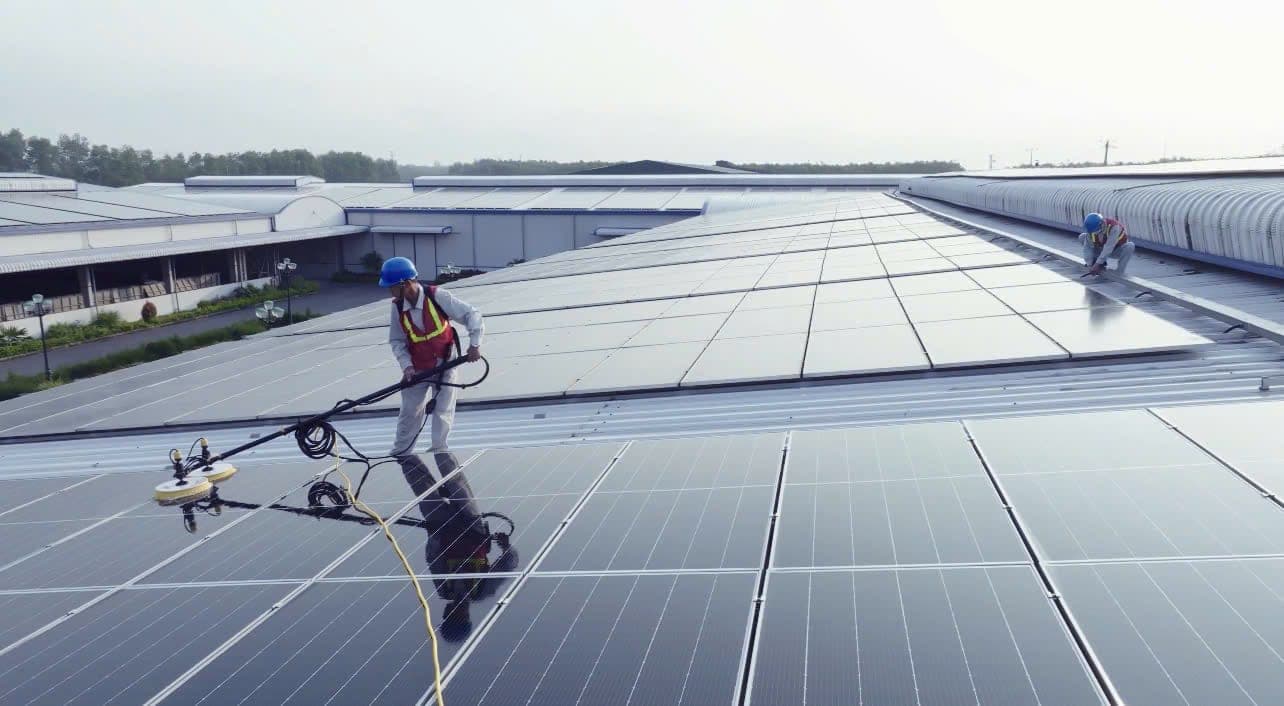
Building a new energy sector requires Vietnam to invest in scientific research and workforce development (illustration).
Alongside developing the workforce for the energy transition and renewables, Vietnam needs to invest in science and technology, promote international cooperation and take advantage of technology transfer from countries further along.
Fairness between all parties must also hold — investors, and the groups across the energy and green economy supply chain. That applies particularly to vulnerable groups such as workers and women employed in coal mines and coal power plants: stable income, and access to social insurance as they move into new sectors.
I believe that with the direction, effort, unity and determination of the Party, the Government and the National Assembly, Vietnam can reach net zero and clear the middle-income barrier to become a developed, high-income country by 2045.
Thank you.
Author: Thu Hường
Source: congthuong.vn
Updated September 5, 2026